Pride Is Giving Burnout: LGBTQ+ People Are Quietly Pulling Back From Pride Culture

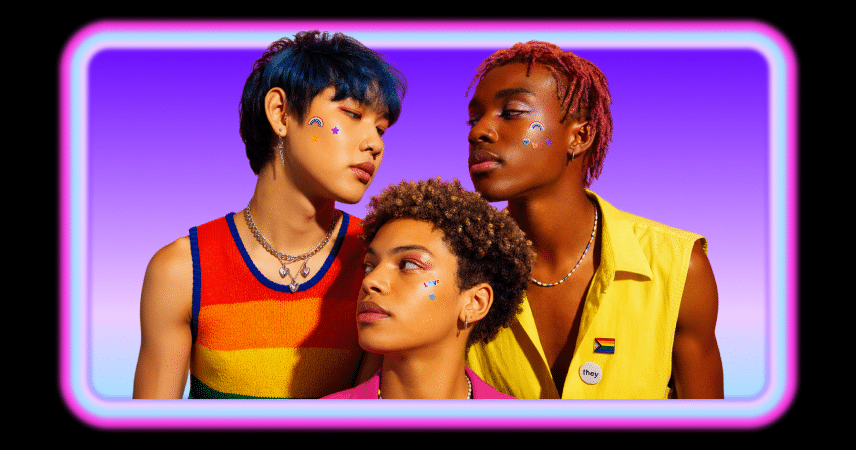
Pride Month is supposed to feel like the moment. Glitter everywhere. Somebody flirting badly in a beer garden. Group chats moving at dangerous speeds. A stranger crying to Chappell Roan in the club bathroom while three people hype them up like emotional support backup dancers.
But according to new research from Taimi, a growing number of LGBTQ+ people are starting to feel disconnected from the version of Pride being sold back to them. The rainbow branding is louder than ever, but underneath all the sponsored floats and curated Instagram posts, a lot of queer people are craving something softer, safer, and way more real.
Okay But… Who Is Pride Actually For?

Mainstream Pride is everywhere in June, but a lot of LGBTQ+ people are still looking at it like “okay cute, but who exactly is this for?” The vibe feels polished. Sponsored. Extremely photogenic.
A lot of respondents said Pride still feels centered around one version of queer life. If you are outside a major city, not built for party culture, or simply not matching the glossy campaign aesthetic, the disconnect can hit hard.
The Rainbow Does Not Always Reach Everyone
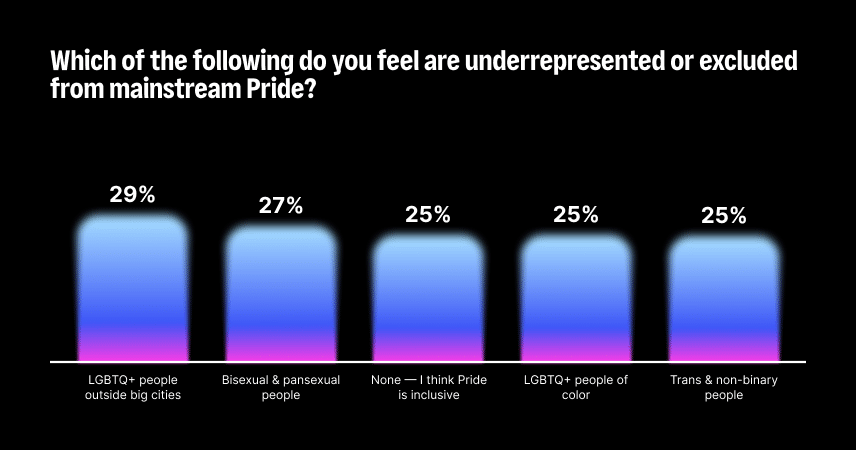
Pride still feels very big city coded. Rooftop parties. Influencer trips. Brand collabs. Meanwhile some queer people are literally just trying to survive a small town dating pool.
Bisexual, pansexual, trans, non-binary, and queer people of color were repeatedly mentioned as groups that still do not feel fully reflected in mainstream Pride spaces.
The Relationship Status With Pride? It’s Complicated
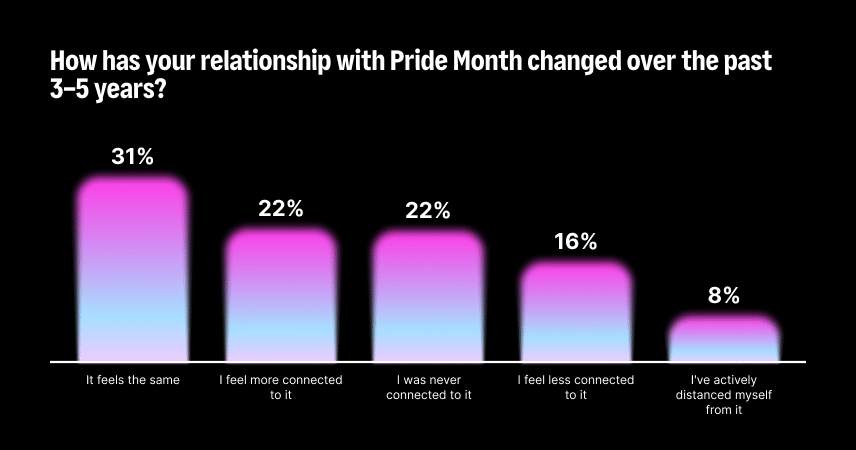
For some LGBTQ+ people, Pride still feels exciting and affirming. For others, the emotional connection is fading a little more every year.
Some respondents said they feel more connected than ever. Others said they never really connected to Pride culture in the first place.
Hot Queer Summer Is Not Guaranteed
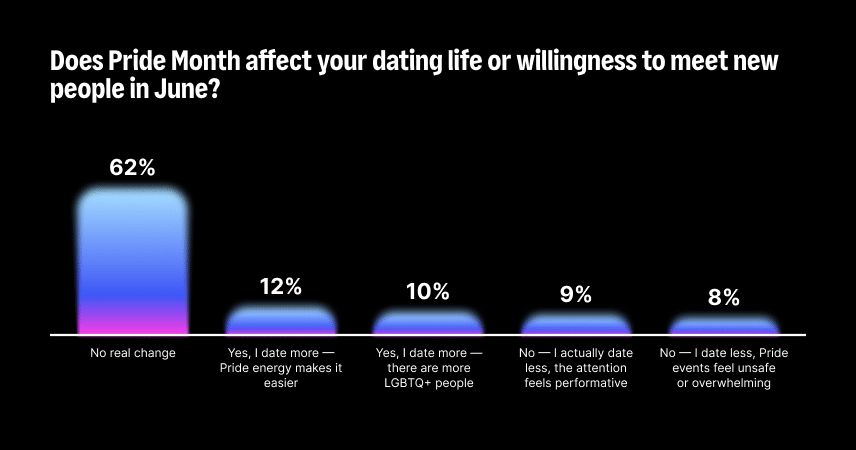
The fantasy is hot queer summer. The reality? A lot of people are still swiping exactly the same way they do the other eleven months of the year.
Some users said Pride energy makes them feel more social and open to meeting people. Others said the atmosphere feels performative, overwhelming, or emotionally exhausting.
Rainbow Capitalism Is Starting To Feel Embarrassing
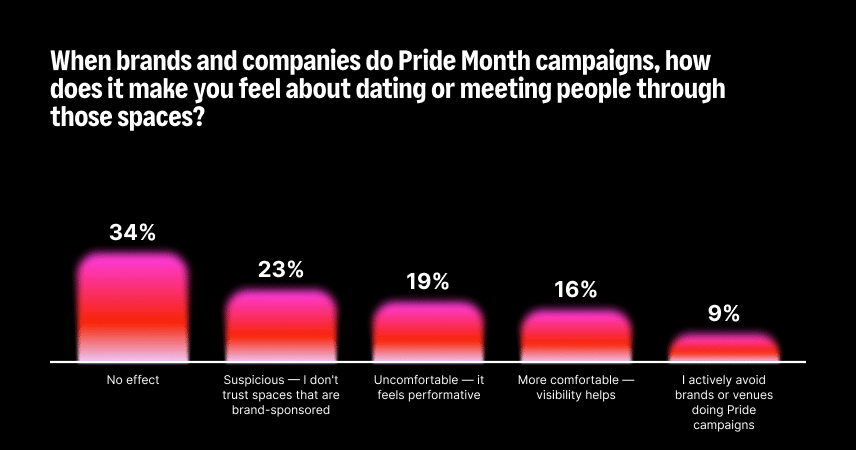
Rainbow logos used to feel exciting. Now they mostly feel like a jump scare in a banking app.
A lot of respondents said corporate Pride campaigns leave them feeling disconnected rather than included.
Pride Should Not Feel Like A Performance Review
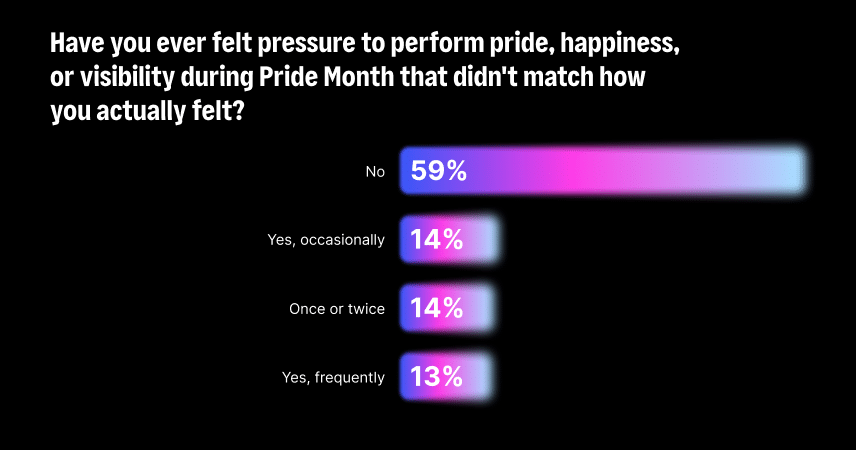
Not everybody wants to spend June looking like the human embodiment of a rainbow confetti cannon.
A noticeable number of respondents said they have felt pressure to appear more visibly happy, social, “out,” or celebratory during Pride Month.
The Sponsored Float Fatigue Is Real
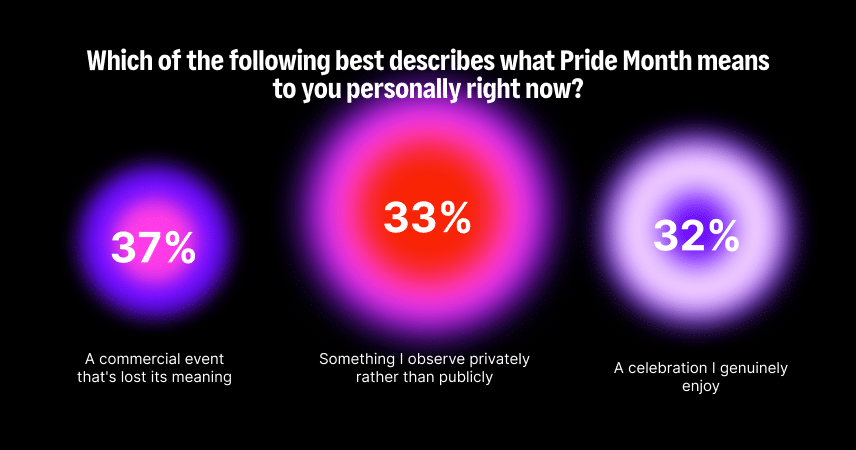
For a lot of LGBTQ+ people, Pride is starting to feel less like a celebration and more like a very long sponsored post.
Many respondents said they now prefer observing Pride quietly rather than fully throwing themselves into the chaos.
Corporate Branding Is Making Things Weird
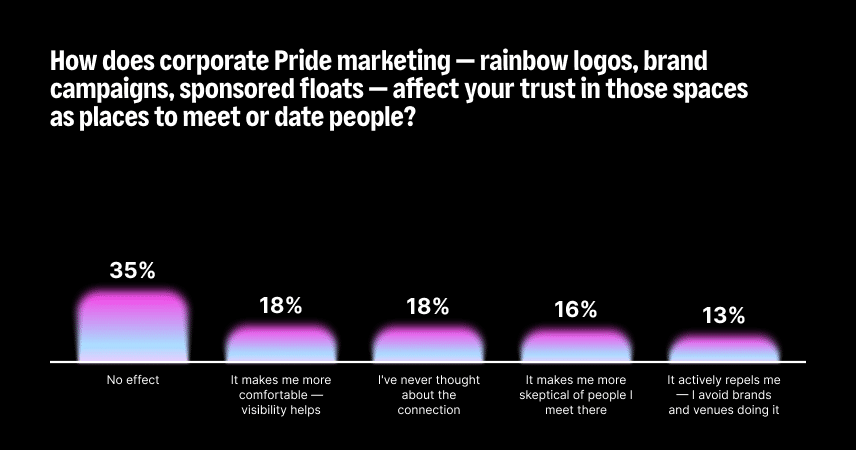
The research showed corporate branding is not just changing how people feel about companies. It is also changing how people feel inside Pride spaces themselves.
Some respondents said heavily branded events actually make them more skeptical of the people around them.
The Political Climate Is Killing The Vibe
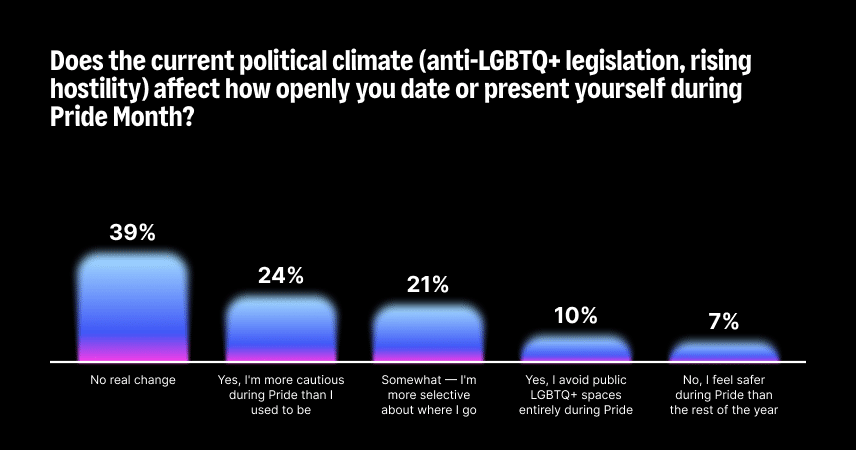
The political climate is absolutely affecting how LGBTQ+ people move through Pride spaces this year. A lot of respondents described feeling more cautious, selective, or emotionally guarded.
For some users, public Pride spaces no longer feel carefree in the way they once did.
Mainstream Pride Still Feels Weirdly Narrow
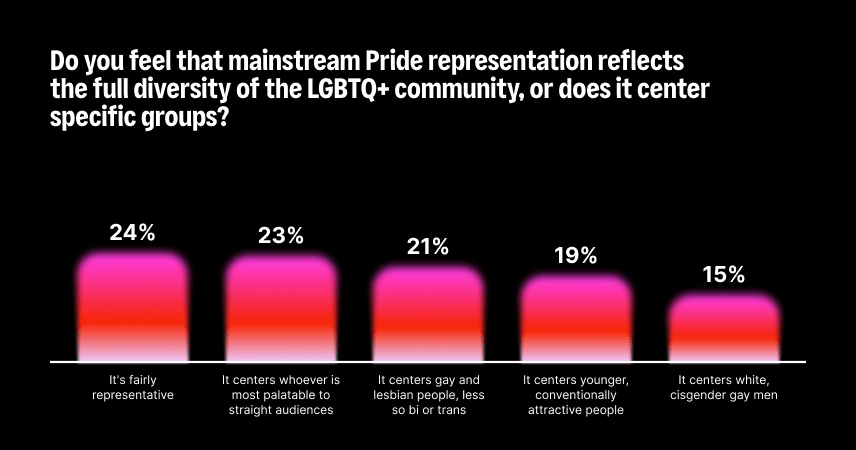
A lot of respondents said mainstream Pride still centers the most socially digestible version of queerness. Young. Attractive. Brand friendly. Extremely Instagrammable.
Bi, trans, and non-binary respondents especially described feeling sidelined by the public image of Pride.
Sometimes The Pressure Is Coming From Inside The House
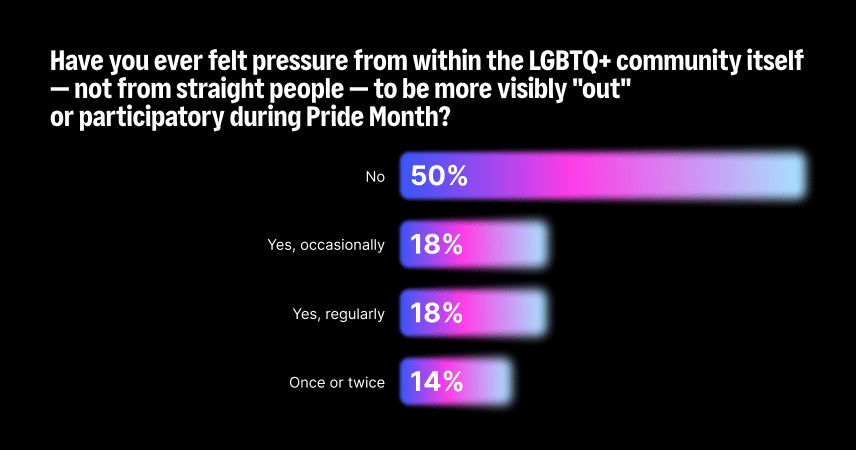
The expectation to be visibly proud, social, and constantly participating is not only coming from brands or straight audiences. Sometimes the pressure is fully internal.
Several respondents described wanting quieter, softer ways to participate in Pride without feeling judged for not being loud enough.
People Want Softer Pride Spaces
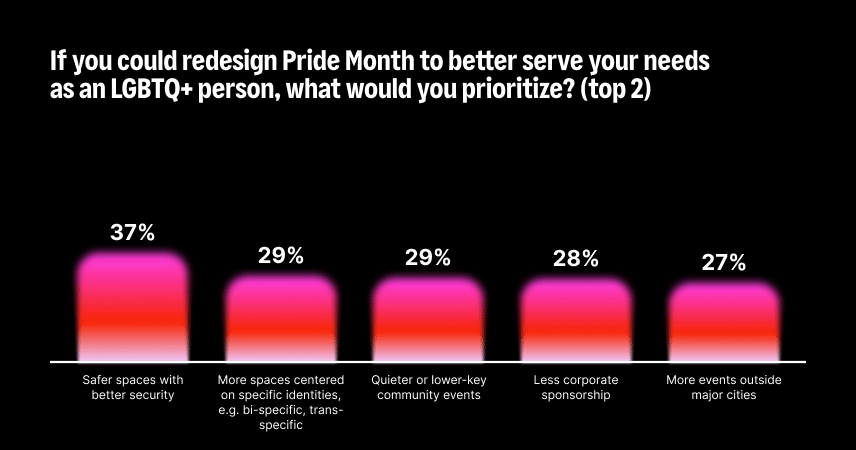
When respondents talked about what they actually want from Pride, the answers felt surprisingly simple. More safety. More authenticity. Less chaos.
People want quieter spaces. Smaller events. Identity specific communities. Less corporate noise.
Pride Still Matters. It Just Feels Different Now
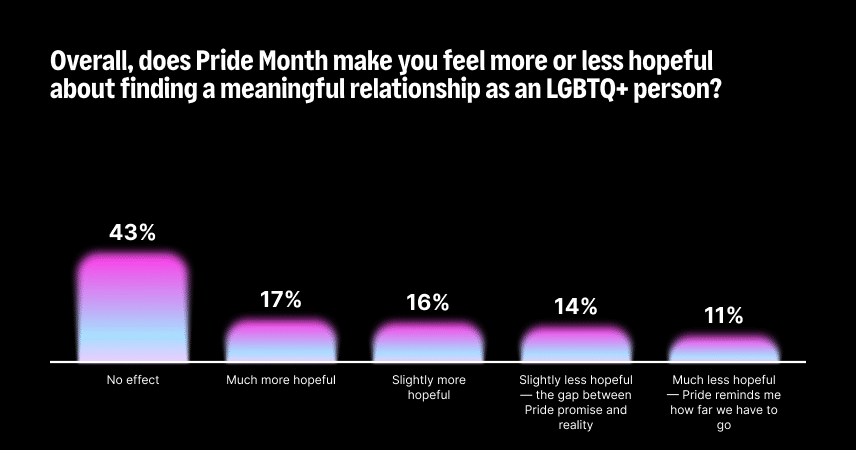
Pride still gives a lot of LGBTQ+ people hope around love, connection, and visibility. That part has not disappeared.
But the emotional relationship people have with Pride is clearly shifting. For some it still feels empowering. For others it feels exhausting.
The Group Chat Had Thoughts
It’s become commodified. It’s a cash grab. Meaningless.
It feels like I’m a performing monkey in a circus.
I feel pressure from allies to be more stereotypically gay during Pride Month.
Less commercial. More mingling and connecting among the LGBTQ+ community.
People have complex identities. It’s not always easy to celebrate something that has caused social distress.
Let’s Be Real
The biggest takeaway from Taimi’s 2026 Pride research? LGBTQ+ people are not done with Pride. They still want joy, visibility, flirting, connection, and community. They just want it to feel real again.
Less pressure. Less performance. Less rainbow capitalism pretending to be activism. More spaces where people can actually breathe, connect, and exist without feeling like they are part of somebody else’s campaign rollout.