Ghosting Is Getting Predictable. Queer Daters Are Over It.

Let’s be honest for a second. Ghosting isn’t shocking anymore. It’s not even dramatic. It’s just… expected. The unanswered message, the conversation that fades out mid-sentence, the connection that disappears without explanation. It’s become such a standard part of dating that most people don’t even question it anymore.
But that doesn’t mean it’s harmless.
We asked 2,503 US-based LGBTQ+ users aged 18–55 about their experiences with ghosting. What came back was clear. Ghosting might be normal, but nobody is actually fine with it.
The Numbers Are Giving… Predictable
Ghosting isn’t rare, it’s routine. 85% of queer daters say they’ve been ghosted recently. And 74% say it’s happened to them more than once. It’s becoming a pattern throughout connections.
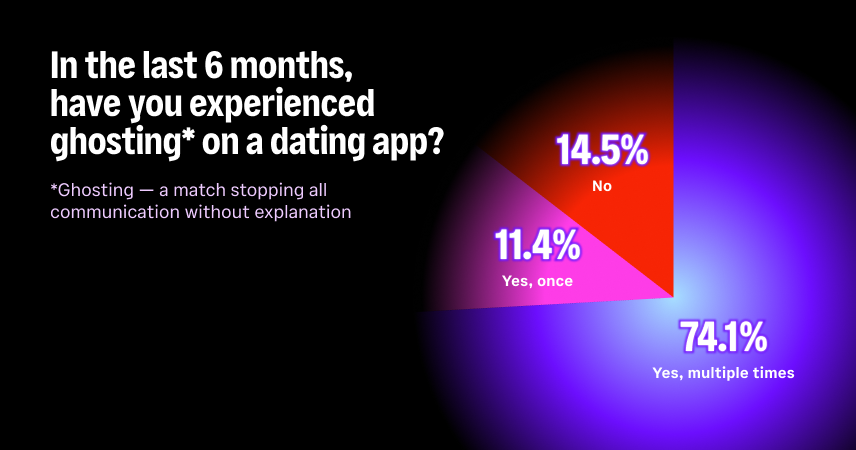
At this point, ghosting isn’t something that might happen. It’s something people expect going into every conversation. And when something becomes expected, it starts shaping how people show up. This can lead to less openness and trust within the LGBTQ+ community.
It’s Quietly Pushing People Out
Ghosting doesn’t just end conversations, it ends momentum. When we asked how much ghosting impacts people’s desire to keep using dating apps, nearly half of users, 49%, fell into the highest risk category for disengagement.
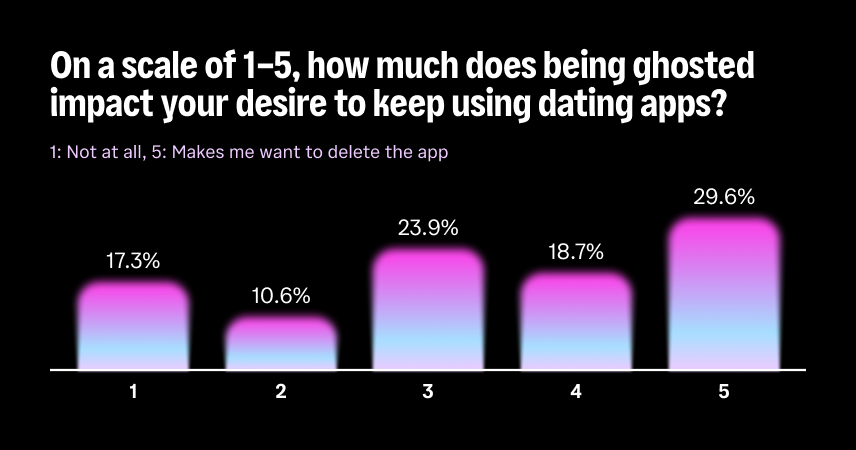
That’s a lot of people sitting somewhere between ‘this is annoying’ and ‘I might just delete this app.’ Not because they don’t want connection, but because the way connection is happening feels inconsistent, unclear and low effort.
The Emotional Response? Mixed, But Not Neutral
Here’s where it gets layered. 32% of users say they feel indifferent when ghosted. On the surface, that sounds like ghosting doesn’t matter. But right behind that, 29% say they feel hurt.
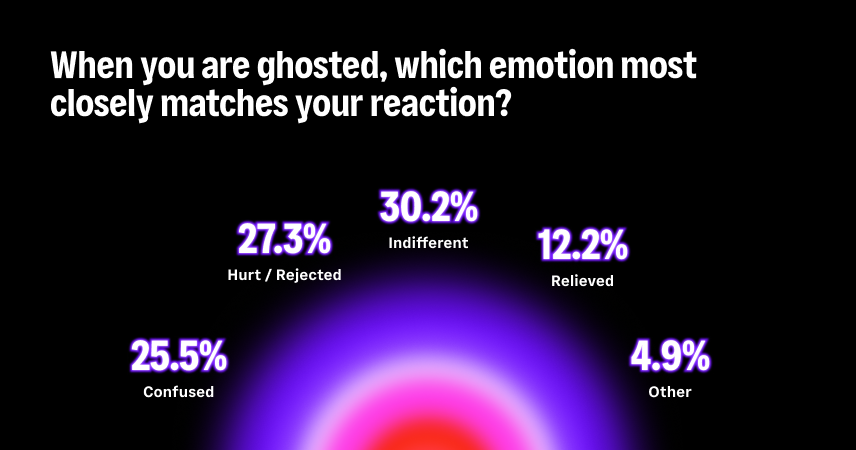
So, what’s actually happening?
Some people have adapted; ghosting has become a commonplace part of the background noise. Something they’ve adapted to, to brush off quickly. Others still feel the emotional impact every time. And neither of them means ghosting is working.
It’s Not Just Online. It Follows You
Queer dating doesn’t exist in isolation; the same people you match with are often the same people you might see out in the world, and ghosting doesn’t stay digital.
23% of users say ghosting makes real-life LGBTQ+ spaces feel awkward.
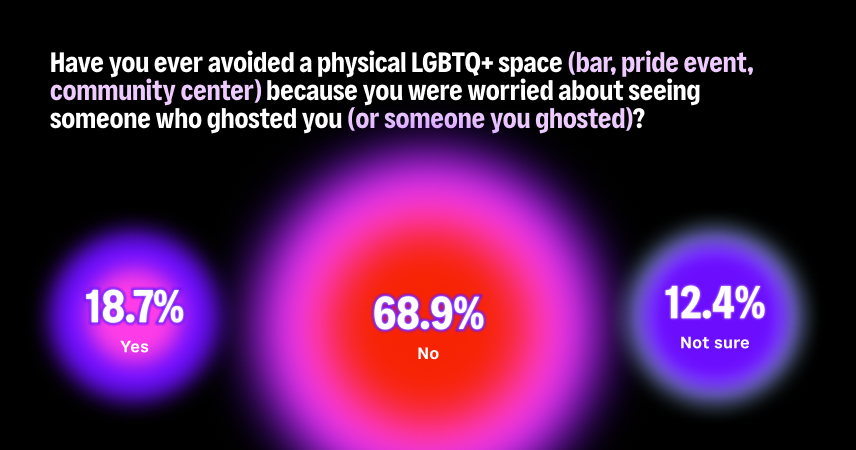
That moment of “do we know each other?” energy across a room, the half-recognition, leading to avoidance. And it goes further than that, nearly 1 in 5 users say they’ve actually limited their offline community engagement because of failed digital interactions.
That’s not just a dating issue anymore, it genuinely impacts the community and how comfortable LGBTQ+ daters feel to show up in their safe spaces.
But Also… People Are Ghosting Too
Here’s the part no one loves to admit, half of users say they’ve ghosted someone themselves.
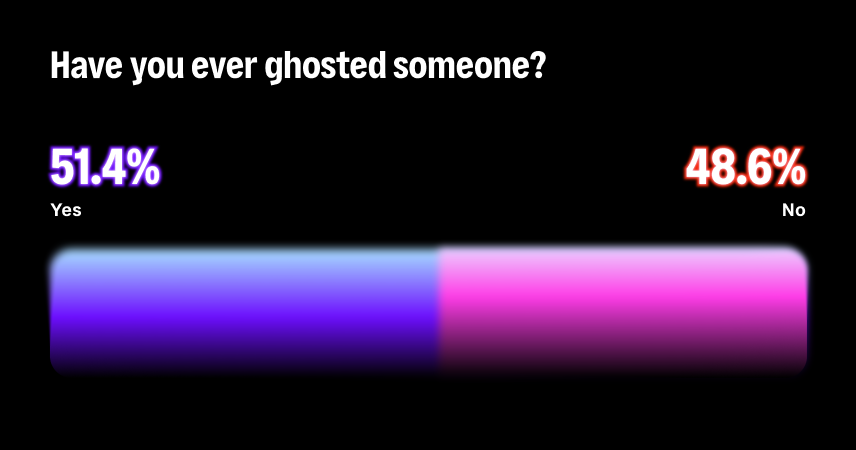
It’s a shared behaviour, and the reasons aren’t dramatic.
Most people say it happens when:
- The conversation starts to feel like a chore
- Red flags show up early
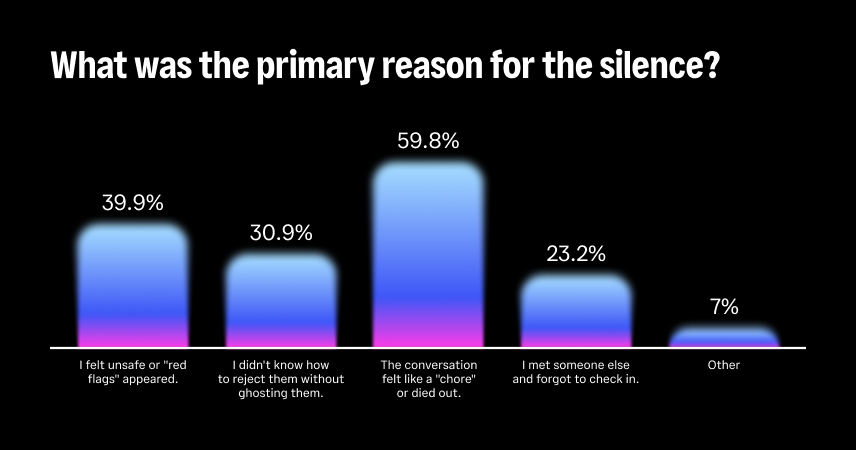
It’s not always intentional harm, sometimes it’s just avoidance or not knowing how to call things off without ghosting someone.
And the emotional follow-up?
31% say they feel no guilt at all, only 11% say they feel a lot of guilt.
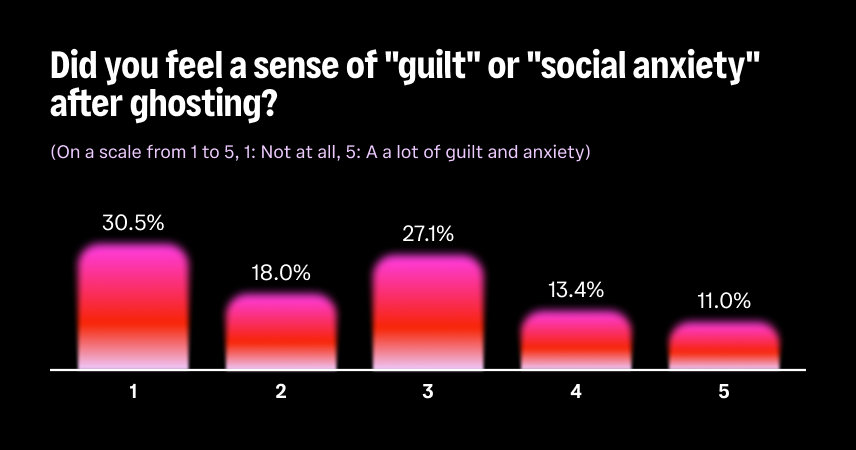
That imbalance matters, because when something doesn’t feel costly, it becomes easy to repeat. People are able to perpetuate the behaviour with no real consequence, because it’s become commonplace.
Is It Even a “Queer Dating” Problem?
Interestingly, not everyone sees ghosting as something specific to LGBTQ+ dating.
48% of users say ghosting in the queer community feels the same as other digital interactions.
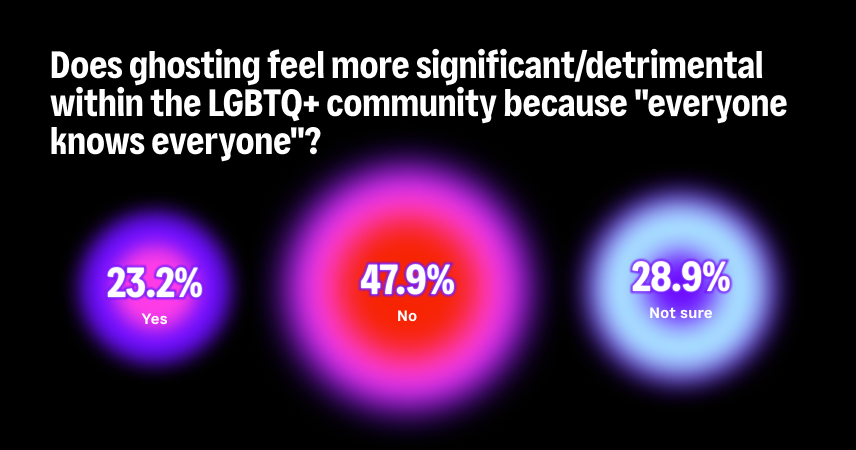
Which makes sense, this isn’t just about dating apps. It’s about how people communicate online… that’s the tea.
But when you layer that onto smaller, more connected communities, the impact hits differently.
The Good News? People Actually Want Better
Here’s where things shift, ghosting might be common, but people aren’t attached to it.
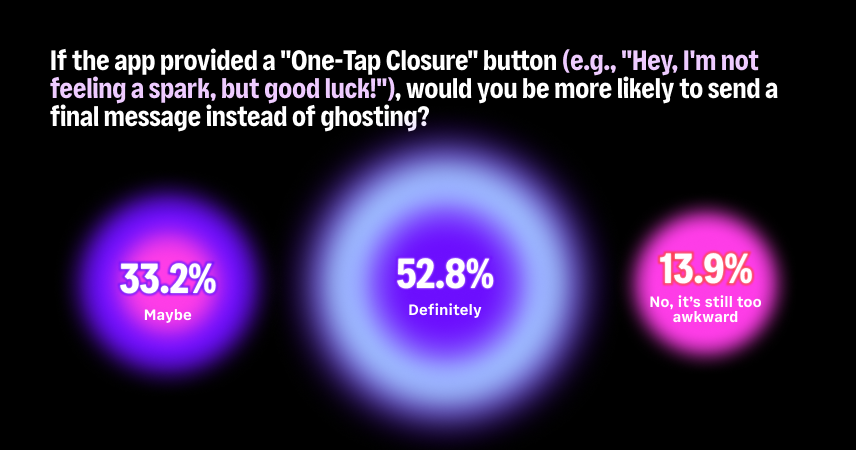
86% of users say they would use a low-effort tool that lets them provide closure instead of disappearing.
And 69% say they’d support stronger inbox features that nudge people to either reply or unmatch instead of leaving conversations hanging.
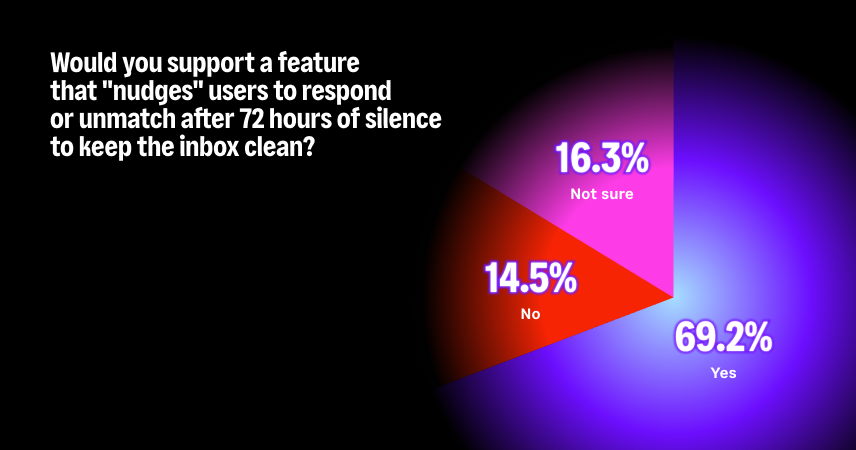
This isn’t a community that wants more effort, it’s a community that wants less ambiguity.
The Take
Ghosting isn’t popular, it’s just easy. Right now, silence is the lowest-effort option, so it wins, but that doesn’t mean it’s what people want. The pattern is clear, people are experiencing it, people are doing it, people are affected by it and people are ready for something better.
Queer dating in 2026 isn’t about chasing endless connections. It’s about protecting your energy, your time, and your peace. And increasingly, that means one thing, clarity over silence.